At a Glance
- Service: Invisalign clear aligners for adults and teens, from a Diamond Provider practice
- Serving: Island Heights and the surrounding riverfront communities from the Toms River office, about 7 minutes away
- Office hours: Monday and Tuesday 9 a.m. to 5 p.m., Wednesday and Thursday 10 a.m. to 6 p.m., Friday by appointment
- Accepting new patients: Yes, Invisalign consultations available
- Differentiator: A Diamond Provider that plans each case carefully with 3D scanning before any aligners are made

Step one: the exam, scan, and plan
A predictable Invisalign result comes from careful planning before any aligner is made. The process starts with a thorough consultation: an oral exam, a gum screening, a bite evaluation, and photos, followed by a 3D digital scan that maps how your teeth will move. That scan lets the doctors preview what is realistic, what might be limited, and what will need extra steps. Nothing about this stage is rushed, and that deliberate pace is what patients who value careful work tend to appreciate most about the practice, and it sets the tone for the whole treatment that follows.
For Island Heights patients, the office is about 7 minutes and 3 miles away, so this first visit is a short trip. You leave understanding your goals, the expected duration, and the what-if scenarios before any aligners are fabricated. As an Invisalign Diamond Provider, the practice brings a large volume of planning experience to that first, decisive step, which suits a community that values doing things carefully.
Why careful planning pays off
The value of thorough planning shows up later, in a smoother treatment. When the initial exam, bite evaluation, and 3D scan are done carefully, the aligner sequence that follows is more likely to track as designed, with fewer surprises and fewer delays. Rushing the planning stage is how cases drift off course and need more refinements than expected.
This is where a Diamond Provider's case volume matters most. Having planned many cases, the doctors can anticipate how a particular bite will respond and design the movements accordingly, including where attachments or IPR will help. For Island Heights patients who value careful craftsmanship, that front-loaded planning is exactly the kind of thoroughness that produces a clean, predictable result, with fewer surprises along the way.

Step two: aligners, attachments, and IPR
Once the plan is set, your custom aligners are fabricated, and you begin active wear, changing trays on a schedule that moves your teeth in small, planned steps. Two tools often make the difference between mostly straight and a precise finish. Attachments are small, tooth-colored shapes bonded to certain teeth that help the aligners grip and guide movement, especially for rotations and bite settling.
IPR, or interproximal reduction, is a controlled polishing between certain teeth to create tiny amounts of space. Done thoughtfully, it can reduce the need for extractions and help aligners resolve crowding more efficiently. Not every case needs either, and the doctors use them only where the movement your plan requires calls for them, explaining why before they do.
Step three: refinements and retainers
Refinements are a normal part of Invisalign treatment. If tracking is slightly off or the last few details need improving, a new scan and additional custom aligners fine-tune the result. Far from a sign something went wrong, refinements are how the doctors get from a good outcome to a precise one, and the practice plans for them.
After the finish, retainers hold your teeth in their new position. Retention is not optional, because teeth can drift back quickly without it, so the doctors set you up with retainers and explain exactly what wearing them will involve. This final phase is what protects the result you worked months to achieve.
What tracking means, and why it matters
Throughout treatment, the doctors monitor how your teeth are tracking, meaning how closely they are following the planned movement. When aligners are worn consistently, tracking stays on plan and tray changes proceed on schedule. When wear time falls short, teeth can drift off track, tray changes may need to slow, and the timeline stretches.
This is why the periodic check-ins matter, and why being close helps. Catching a tracking problem early, such as a tray that no longer fits well, keeps a small issue from becoming a delay. For Island Heights patients, the 7-minute trip makes those check-ins easy, and the doctors' experience as a Diamond Provider helps them spot and correct tracking issues before they cost you time.
Everyday care that keeps treatment on track
The daily habits around Invisalign are simple but they directly affect your result. Most plans require 20 to 22 hours of wear, so the trays come out only for meals and for anything besides water. Hot drinks can warp the plastic, and sugary or acidic drinks trapped under the aligners raise cavity risk, so plain water is the rule while they are in.
Cleaning is gentle and consistent: a soft toothbrush, cool water, and a routine that clears plaque film keeps the trays clear and odor-free. Brushing and flossing before you reinsert the aligners protects the teeth underneath, since the plastic can otherwise hold plaque against enamel. The doctors give Island Heights patients a straightforward routine, and following it is a large part of what keeps a carefully planned case tracking as designed.

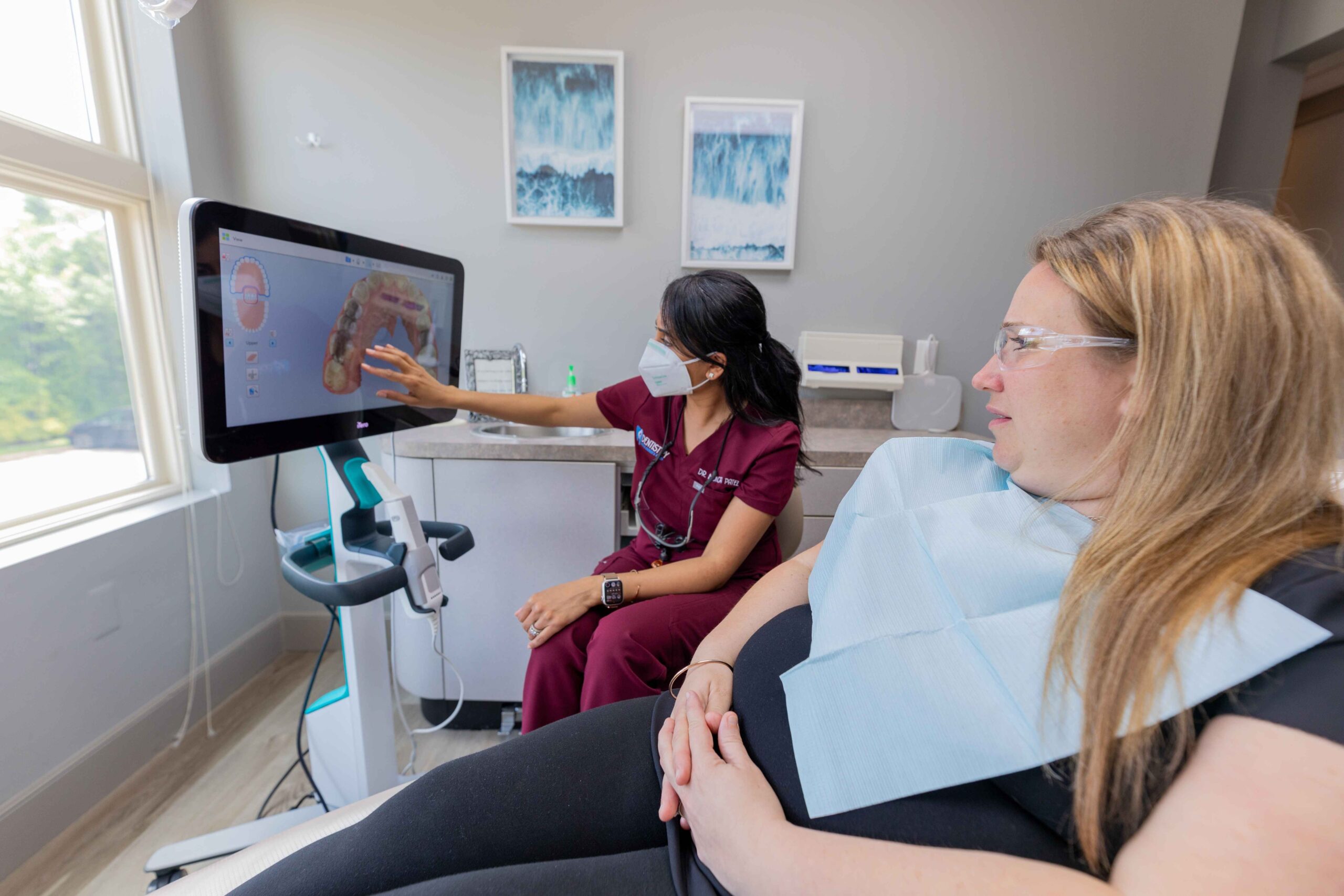
Meet the dentists who will plan your case

Both dentists are women and certified Invisalign providers who plan cases personally, with careful attention to the details that make a result precise. Dr. Monica Patel brings a bite-focused foundation and full-mouth training. Dr. Monica Patel earned her Doctor of Dental Medicine from the University of Pennsylvania School of Dental Medicine and is a certified Invisalign provider. She has formal training in occlusal therapy and full-mouth rehabilitation from the Pankey Institute, which helps her plan aligner cases around a healthy, balanced bite rather than tooth position alone.
Dr. Rakhee Patel leads many of the clear-aligner evaluations. Dr. Rakhee Patel earned her DMD from the Arizona School of Dentistry and Oral Health, where she was named Best Dental Student of the Year, and is a certified Invisalign provider who has practiced since 2012. She is a member of the American Academy of Clear Aligners and also trained in occlusal therapy at the Pankey Institute. Their combined case volume is what earned the practice its Invisalign Diamond Provider status.
Driving directions from Island Heights
From Island Heights, cross out of the borough toward Toms River and pick up the local roads heading to Hooper Avenue. Follow Hooper a short distance and turn onto Oak Avenue, where the office sits at 222 Oak Avenue, Suite 8, with on-site parking.
It is one of the shortest trips of any community served: about 7 minutes and just 3 miles. Since Invisalign involves a consultation and periodic check-ins, that closeness makes the whole process simple, with no highway stretch and no downtown parking search.
Cost, insurance, and financing
The cost of Invisalign clear aligners depends on your case complexity, the number of aligners, and what is included, such as refinements and retainers, so an exam is the only way to get an accurate estimate. The doctors give you a clear one at your consultation.
Many dental plans include orthodontic benefits that can reduce out-of-pocket cost, so it is worth checking your coverage. The practice offers financing so Island Heights patients can pay the balance in monthly installments, with the full cost clear before you commit.
Click on a link below to learn more about our other General & Preventive Dentistry services
Island Heights Invisalign questions
What actually happens at the first Invisalign visit?
A: The first visit is a full evaluation: an oral exam, gum screening, bite evaluation, photos, and a 3D digital scan that maps how your teeth can move. The doctors use it to preview a realistic result and explain the plan, duration, and what-if scenarios. From Island Heights it is about a 7-minute trip, so this planning visit is easy to make. You leave that appointment with a genuine understanding of your case rather than a vague sales pitch.
What are attachments and IPR, and will I need them?
A: Attachments are small, tooth-colored shapes that help the aligners grip and guide movement, and IPR is a light polishing between teeth to create tiny amounts of space that can reduce crowding without extractions. Not every case needs either; the doctors use them only where your planned movements call for them and explain why first.
Are refinements a sign that something went wrong?
A: No. Refinements are a normal, planned part of Invisalign treatment. If tracking is slightly off or the final details need polishing, a new scan and a few extra aligners fine-tune the result. They are how the doctors move from a good outcome to a precise one, not a sign of failure. Building them into the plan from the outset is a mark of a provider who aims for precision rather than just close enough.
What does it mean if my teeth are not tracking?
A: Tracking means how closely your teeth are following the planned movement. If a tray no longer fits well, your teeth may have drifted off track, often from inconsistent wear. Catching it early at a check-in lets the doctors correct course before it costs you time, which is why the periodic visits and consistent wear both matter.
How does being a Diamond Provider affect my treatment?
A: Diamond is a tier based on case volume, so it reflects a lot of planning experience. For your treatment, that means the doctors have handled many cases like yours, can plan efficiently, and are quick to spot and fix tracking issues. Combined with knowing your overall dental history, it supports a smooth, predictable process. It is a practical advantage rather than a marketing label, since the planning experience behind that volume is exactly what keeps a case predictable from the first scan to the final retainer.
Dentistry with a Woman's Touch
222 Oak Ave # 8, Toms River, NJ 08753
(732) 518-3088
Have a question? We have answers.
New Patient Specials
New Patient Exam & Healthy Mouth Cleaning
$189
No insurance? We offer a $189 Comprehensive New Patient Exam, X-Rays, and a Healthy Mouth Cleaning.
New patients only. Cannot be combined with insurance. Includes a Healthy Mouth Cleaning in the absence of periodontal disease.
No Insurance?
The Dentistry with a Woman's Touch Friends & Family Membership Plan
With our membership plan, you can receive the quality care you need at a discounted price.
Cannot be combined with insurance.
Our Toms River Dental Practice Location

Office Hours:
Monday: 9 am-5 pm
Tuesday: 9 am-5 pm
Wednesday: 10 am-6 pm
Thursday: 10 am-6 pm
Friday: limited clinical hours by appointment only**

